
West-Facing Rooms and Home Window Film
· 6 min read
The short answer
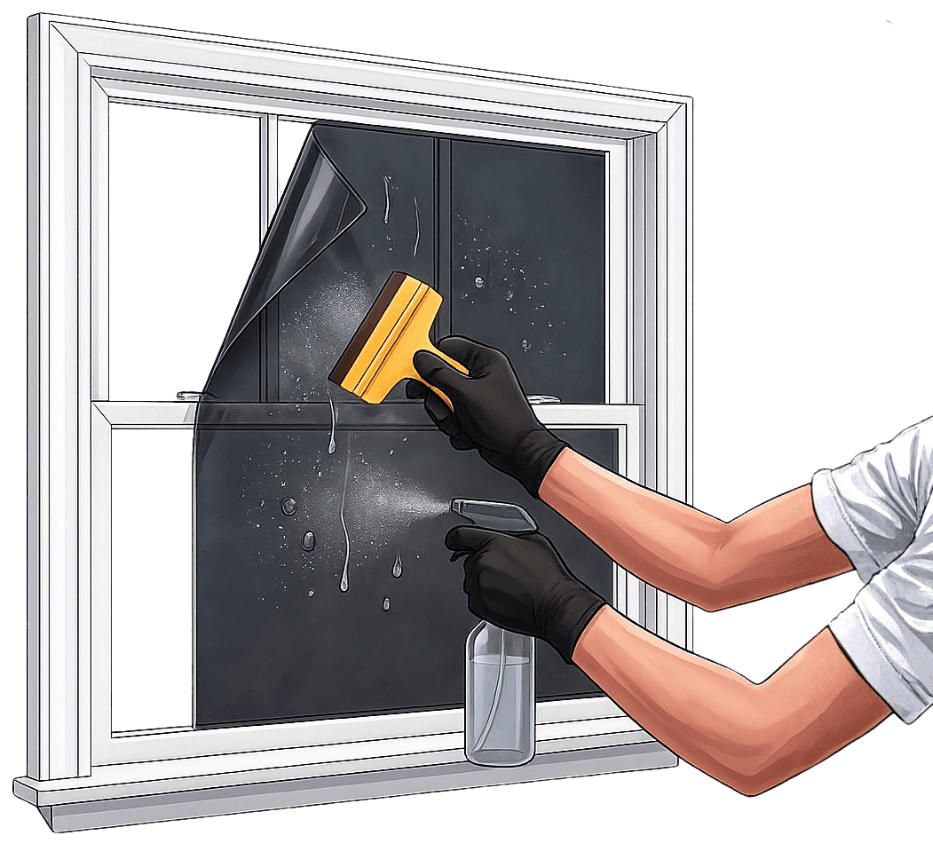
In a Central Texas house the problem room is almost always the west-facing one: it takes the sun at its lowest angle, straight through the glass rather than over the roof, for the three hottest hours of the day. Window film is the fix that doesn't require replacing the windows — it rejects solar heat before it enters the room, cuts the glare that makes a screen unreadable, and blocks the UV that bleaches flooring in a stripe along the wall. We measure on site and quote in writing, because a house isn't a price list.
Why west is the problem#
A summer sun overhead at noon mostly hits your roof, which is insulated. By four in the afternoon it's low in the western sky and pointed directly through vertical glass, which isn't. That's why a room can be pleasant all morning and unusable from three o'clock — it isn't the outside temperature changing, it's the angle.
In practice it shows up as a house where the thermostat is set the same everywhere and one room is always five degrees warmer, the AC never stops running after lunch, and a chair got moved out of the sun years ago and never moved back.
What film does about it#
- Heat. Solar energy is rejected at the glass, before it becomes heat inside the room, so the AC has less to remove rather than working harder to keep up.
- Glare. The reason a west-facing home office is unusable at 4pm is a screen you can't read, and that's visible light, not temperature.
- Fade. UV bleaches hardwood, rugs and upholstery, and it does it in a hard-edged stripe wherever the light lands. Film takes the UV out of that equation.
- Even temperature. The practical win in most houses isn't a lower bill, it's that one room stops being the room nobody sits in.
What the visit looks like#
- 01We come out and look at the actual rooms. Which way they face, what the glass is, and which one you're really calling about.
- 02We measure. Square footage of glass, pane by pane, plus anything awkward — arches, tall stairwell glass, sliders.
- 03You get it in writing. One number, itemised by room, before anyone commits to anything.
- 04Install happens in the house, in one visit for most homes. Furniture gets moved back where it was.
There's no published price list for this the way there is for a car, and there shouldn't be — glass area, access, pane type and film choice move the number too much for a table to be honest. The estimate is free and it's specific to your house.
Will film make my rooms dark?
Only if you want it to. Residential film runs from near-clear heat-rejecting products through to genuine privacy shades. Most homeowners who call about an afternoon room end up on something light — the heat and glare come out, the view and the daylight stay.
Can film go on double-pane windows?
Usually, yes — but it's the one question worth asking properly, because the wrong film on the wrong sealed unit can cause thermal stress in the glass. That's a large part of what the on-site visit is for: we look at what the glass actually is before recommending a product for it.
Does it work on a storefront too?
Same film, same physics, bigger glass. Commercial work is mostly west and south elevations, glare on point-of-sale screens, and keeping the front of house comfortable without dropping the blinds and hiding the merchandise.
Georgetown and Williamson County. We measure, you get it in writing.
Book a free on-site estimate